18th - 23rd August 2026
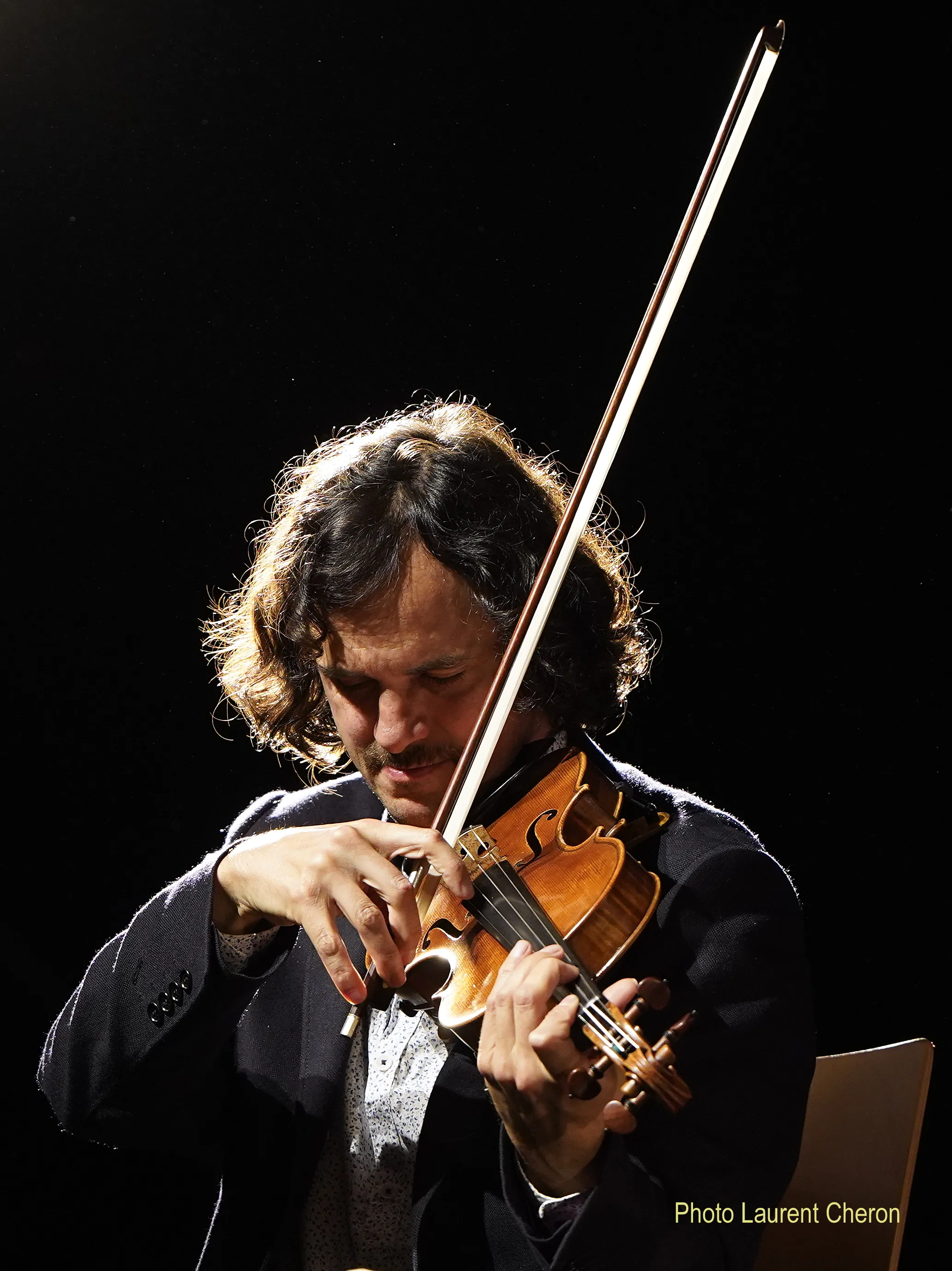
This course with Tcha Limberger focuses on the musical language of Transylvanian gypsy music. Working with traditional repertoire, participants explore melody, rhythm, ornamentation, and stylistic phrasing as they are used within this tradition. Drawing on his long-term engagement with Transylvanian and Roma musicians, Tcha approaches the material from the inside, emphasizing listening, repetition, and ensemble playing. The course is open to instrumentalists interested in gaining a practical understanding of this rich and nuanced musical style.
Student requirements
-
Instrumental technique: intermediate
-
Western theory: any level
-
Sight reading: basic
-
Transposition: any level
-
Learning by ear: intermediate
-
Composition: any level
-
Improvisation: any level
Tcha Limberger is a distinguished multi-instrumentalist, composer, and educator whose deep emotional connection to music has shaped a career spanning decades and continents. Known for his rare ability to move effortlessly between genres, he has become a significant force in both traditional and contemporary music, collaborating widely and inspiring audiences around the world.
Drawing on cultural themes and his Romani heritage, Limberger has contributed meaningfully to world music and influenced a new generation of musicians. He studied the music of Kalotaszeg with Neti Sándor and the Budapest Magyar Nóta style with Horváth Béla. His dedication to the language and cultural context of these traditions has earned him recognition as one of the leading contemporary figures in the music of the Carpathian Basin. His album Fekete éjszaka, borulj a világra with the Budapest Gypsy Orchestra received a Songlines nomination in 2015.
Born into a renowned Belgian Manouche family, he grew up surrounded by diverse musical traditions, including Django Reinhardt’s Gypsy swing. His early start included solo Flamenco performances at the age of eight. His interests later expanded to the music of the Aimara and Quechua people of Bolivia, as well as modern classical composition, which he studied with Dick Vanderharst. He also cites Koen De Cauter and Herman Schamp as formative influences.
Today, Limberger remains an influential presence in jazz, folk, and world music. His current projects include I Silenti with Fabrizio Cassol, the all-string swing ensemble Les Violons de Bruxelles, and The Viper Club, which celebrates the music of Stuff Smith.